Critical summary review
In late June 2026, Europe made headlines for the most physical reason imaginable: heat. Researchers are already calling it the worst heat wave ever recorded on the continent. France logged the hottest day in its history, with the daily average topping 86 degrees Fahrenheit, a mark no national thermometer had reached since record-keeping began in 1947. The United Kingdom broke its June record. Spain saw its hottest June days since 1950, and the Iberian Peninsula edged close to 111 degrees. The World Health Organization called the event a health emergency.
The image that best captures the moment may be King Charles III at a London Climate Week reception, cooled by a small battery-powered fan held by an aide. The continent that spent centuries exporting the idea of a temperate climate found out, the hard way, that it was not built for this. Museums closed in Italy for lack of power. In Belgium, the price of electricity passed one euro per kilowatt-hour at dusk as power plants maxed out to keep air conditioners running. In Sweden, a rail line buckled in the heat and derailed a freight train. In France, most of the deaths did not come from classic heatstroke but from drownings, people wading into rivers and lakes to escape the heat.
why europe is on fire
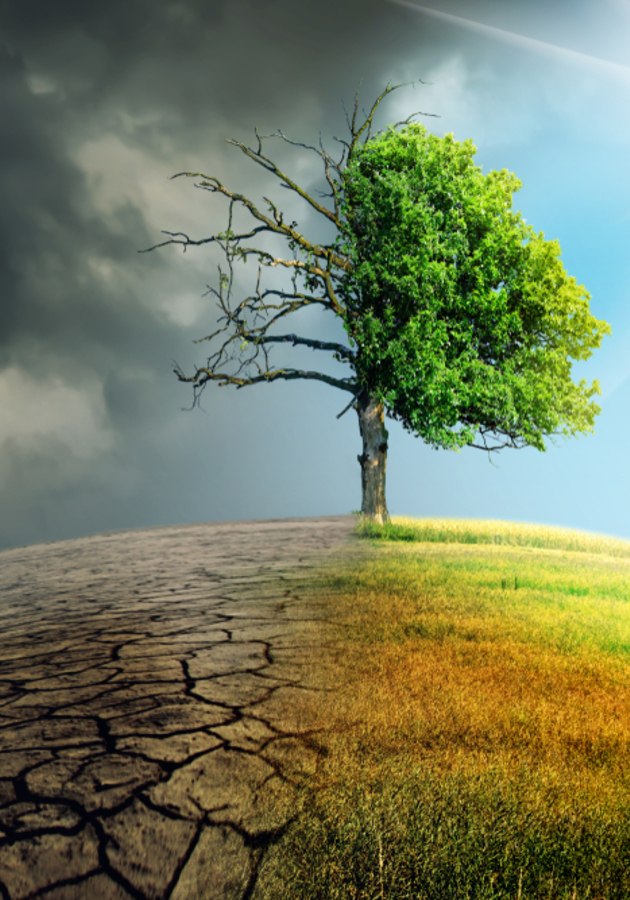
The temptation is to pin it all on one name, and the name that usually comes up is El Niño. This is the first misunderstanding worth clearing. What is cooking Europe right now is a heat dome, a stubborn high-pressure system that meteorologists nicknamed an Omega block. It pulled hot air up from North Africa and parked it over Western Europe, leaving clear skies and baking ground day after day. Underneath that atmospheric machine sits a floor that rises every year, global warming, which turns what would have been a hot summer into a string of records.
El Niño is real, it is forming, and it is intensifying right now. But its influence on the Northern Hemisphere summer is weak. In the European summer it is a supporting actor. The lead role belongs to the atmospheric block sitting on an already warmer baseline. Europe is not hot because of the Pacific. It is hot because African air got trapped on top of it.
the engine that actually reaches us
If El Niño is an extra in Europe, on our side of the world it is the lead. That is exactly why the two stories are worth separating. One machine is roasting Europe today. The other is loading up in the Pacific, and the country that will feel it is the United States, this coming fall and winter.
El Niño is the abnormal warming of surface waters in the equatorial Pacific. That warming reshuffles winds and rainfall on a planetary scale, and in the US it splits the country roughly along a north-south line. The latest reading from the international forecasting centers already puts the Pacific's benchmark index above 1.5 degrees Celsius in mid-June, with El Niño conditions established and strengthening. The odds climb through the year, topping 80 percent for the second half, according to the NOAA bulletins tracked by forecasters worldwide.
what el niño does to the united states
The geography of the phenomenon here is almost a split screen. Across the northern tier, from the Pacific Northwest through the northern Rockies and into the Great Lakes, El Niño winters tend to run warmer and drier than normal. The Ohio Valley leans dry as well. Across the southern tier, the story flips. From California to Florida and up the East Coast, the southern US usually turns cooler and wetter, as the Pacific jet stream slides south and lines up storm after storm. Anyone who watched freeways flood in Los Angeles during past El Niño winters knows what that warning carries.
The practical effects go beyond the daily forecast. A milder northern winter usually means lower heating demand, a break on natural gas bills across the upper Midwest and Northeast. In the West, a wet, stormy California can refill reservoirs and pile snow onto the Sierra, welcome relief after dry years, though the same storms raise the risk of flooding, mudslides and coastal erosion. There is one piece of good news that often rides along: El Niño tends to suppress the Atlantic hurricane season, tilting the odds toward a quieter run of storms. For agriculture, a wetter South can help winter wheat on the southern Plains, while the drier, warmer North carries its own risks, including wildfire in the eastern and northern Rockies.
the shadow of 1997
American history holds its own reminder of what a strong El Niño can do. A super El Niño, when the ocean anomaly climbs past 2 degrees Celsius above average, has happened only four times in 150 years: 1877, 1982, 1997 and 2015. Current models suggest 2026 could be the fifth. The 1997-98 event is the one most Americans of a certain age remember: a parade of storms that battered California, billions of dollars in damage, deadly flooding and mudslides, and a winter so mild across the North that it rewrote local records.
The difference between then and now is not the climate, which may be harsher today. It is what we hold in our hands. Earlier generations met these swings half-blind. We have satellites, seasonal models and months of warning. The open question is whether we use what we know.
There is a detail forecasters are careful to repeat, and it separates serious information from easy alarm. El Niño tilts the odds. It does not hand down a verdict. The most recent strong event, in 2015-16, did not deliver the rain the southern US expected, and some places stayed dry. Other ocean patterns, like the state of the Pacific Decadal Oscillation, can pull the outcome in another direction.
The effects also concentrate in a season, mostly late fall through early spring, when El Niño's grip on the Northern Hemisphere is strongest. So the right posture in front of the headlines is not a jolt of fear. It is attention. The phenomenon alone does not decide the weather of an entire country. It nudges the scale, and anyone watching the forecast can get ready before the scale tips.
what to do with this information
For anyone making decisions in business or operations, the place to start is exposure to energy and to water. It is worth revisiting heating-cost and natural gas scenarios for the coming winter, mapping any dependence on Western water supply or southern crops, and treating the seasonal outlook as a planning variable rather than a news curiosity.
For anyone who follows the world out of interest, the lesson is not to blur the two machines. Europe's heat and the US outlook have different causes. Reading the bulletins from NOAA's Climate Prediction Center pays off more than reacting to record headlines, because that is where the signal shows up before the effect.
For anyone who just wants to get through the year, the rule is simple and regional. In the South and in California, watch for heavy rain, flooding and storm-prone areas. In the North, expect a milder, drier winter, with wildfire worth watching in the Rockies. None of it is sealed fate. It is a tendency, and a tendency can be tracked.
Two machines, not one. One is roasting Europe now. The other is forming in the Pacific and heading our way.
Europe shows the price of not being ready. Records, deaths, blackouts, buckled rails, all in a wealthy continent that thought it was safe.
The US still has time. El Niño has not arrived at full strength, and the forecast is already on the table. Earlier generations faced these swings in the dark. We do not have to.
The heat is the news. What comes after it is a decision.

Sign up and read for free!
By signing up, you will get a free 7-day Trial to enjoy everything that 12min has to offer.